From skepticism to purchase
Acquisition for an expensive product with no ready demand: events, free mini-courses and promo mechanics that turn a cold audience into buyers
- Product Manager
- 2025 — 2026
60%
of company revenue came from acquiring new customers
+81%
more new contacts from events per quarter, at a 37% lower cost per contact
52%
event margin
×11
return on the Telegram-bot game
119%
of the revenue plan delivered by free products in Q2 2026
8 → 60
promo-code purchases from events per quarter
Context and goal
Product
Online courses in design and product management priced from 30,000 to 120,000 rubles. Nobody needs this kind of learning urgently: people put the decision off, compare different providers and doubt whether it’s worth the money. A purchase takes weeks to mature.
Goal
Every quarter, bring in new people and turn them into buyers so that acquisition pays off. Events had to bring in 20–25% of company revenue and stay profitable, each free product had its own revenue plan, and the cost of a new customer couldn’t grow as the budget grew.
My role
From summer 2025 I owned events, and from January 2026 all new-customer acquisition: events, free products and promo mechanics. I formulated and tested hypotheses, calculated unit economics and the payback of every channel, planned the quarterly budget and built the mechanics myself.
A three-step funnel
Someone who doesn’t need training right now won’t buy on the first touch. First they need to get value for free, then see that the product will solve their problem, and only then get a reason to buy now.
Value for free
Bring in a new person and give them a result without payment.
Trust
Show the product from the inside and the people behind it.
A reason to buy now
Turn interest into a purchase.
The model fits any product people buy after long consideration: B2B services, financial products, expensive subscriptions.
Events as a trial of the learning
Fewer, bigger events. Events used to run every week or so: the team didn’t have time to prepare and the audience got tired of announcements. I suggested moving to rare, large events that showed a path through the whole course line-up. In Q4 2025 event revenue grew by 16% and the cost of acquiring a buyer fell by 17%.
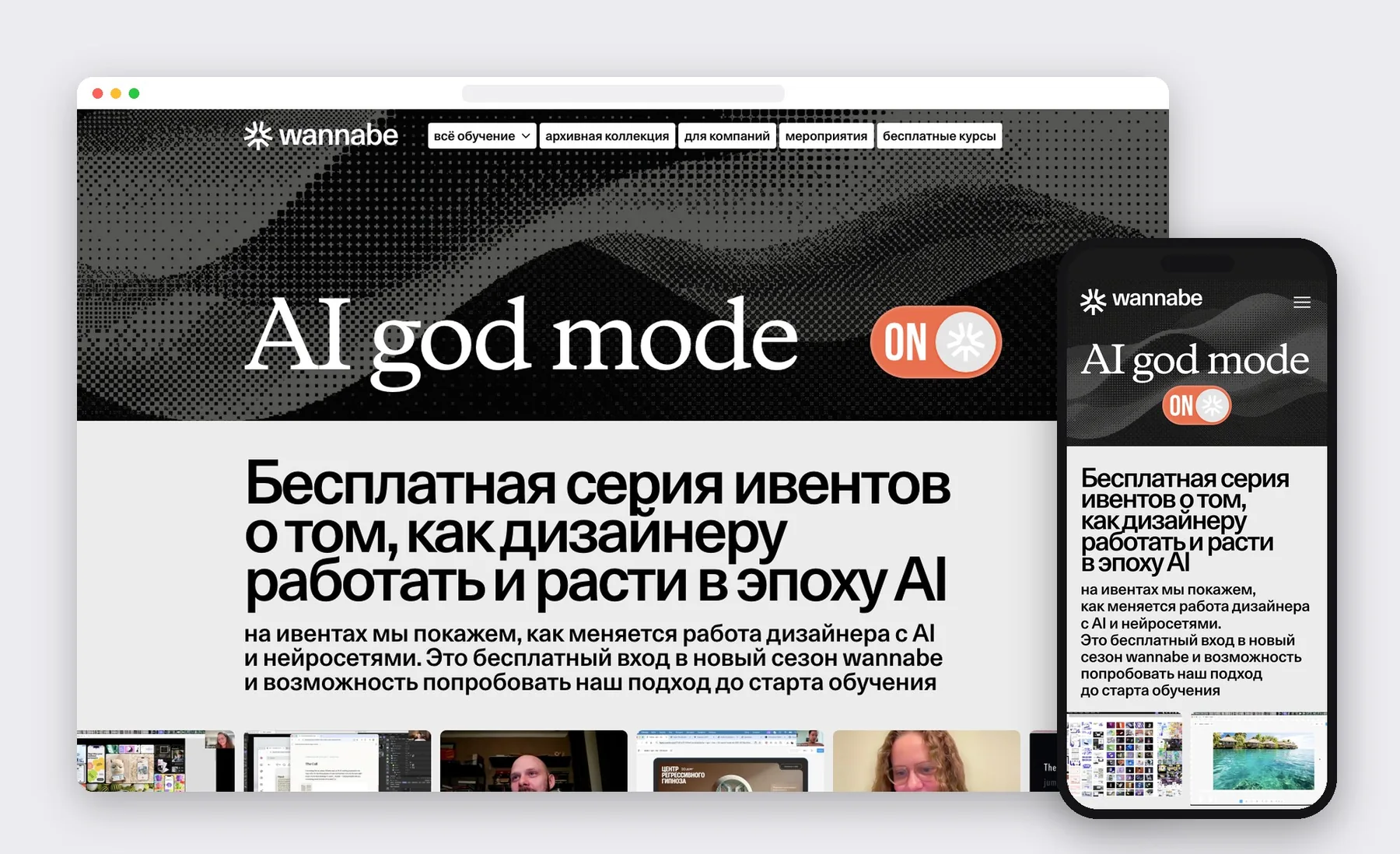
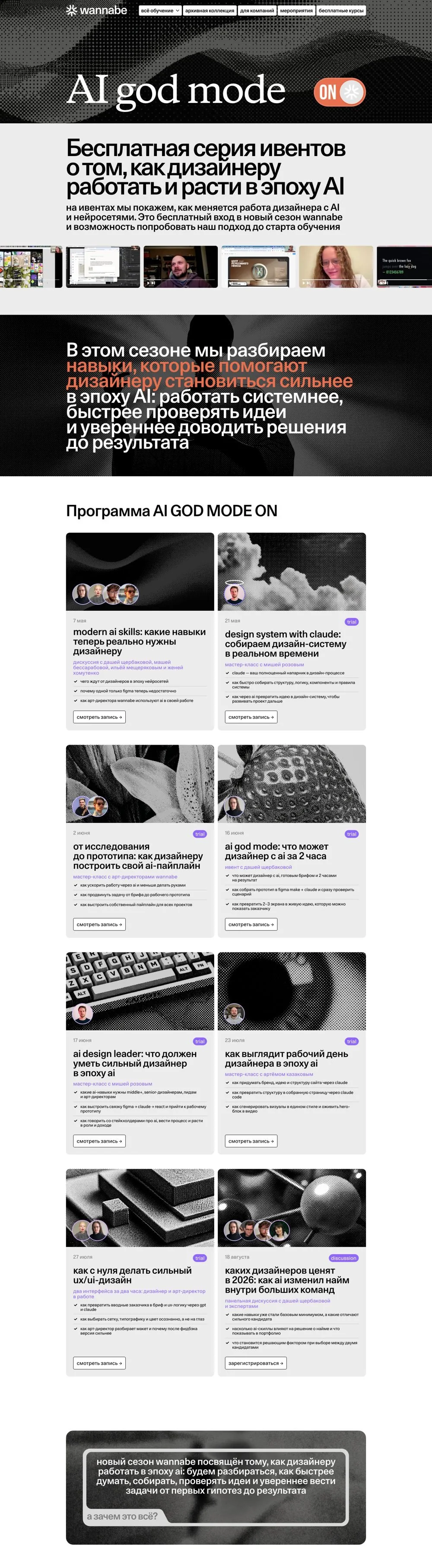
A landing page for each event and one season page. For ads, each event had its own landing page with its own offer. Above them sat the season page: the shared idea, the programme, sign-up for several streams at once and recordings of past ones. The editor wrote the copy and the media buyer ran the ads. The series started to work as a trial of the learning: 61% of payments in Q2 2026 came from people registered for two or more events.
A schedule built around decision points. In Q1 2026 new people almost stopped coming towards the end of the sales period, and the hesitant never decided. I rebuilt the schedule around three moments: the start of sales, the end of early-bird prices and the last days before the course starts. In Q2 that dip didn’t happen, and event payments grew by 28% with a 21% larger budget.
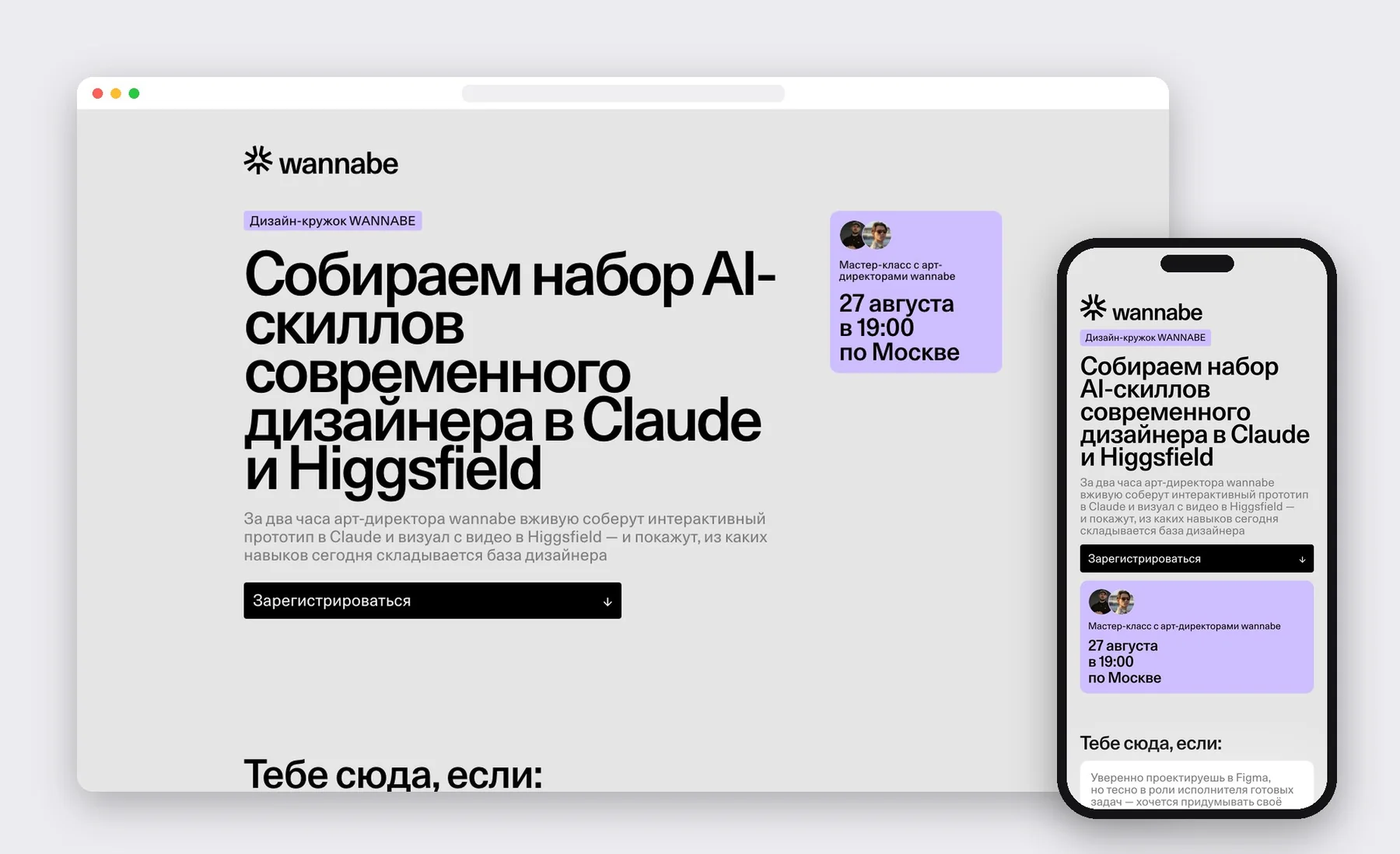
› See the full season page
Promo mechanics: a reason to buy now
Stackable discounts. The event discount stacked with other offers, so buying right away paid off better than waiting for a sale. Promo-code purchases from events grew from 8 to 60 per quarter.
A game in a Telegram bot. Eight questions; each correct answer adds 1% to a discount that stacks with the current offer. The game engages people, gives them a personal discount and a reason to come back to the purchase.
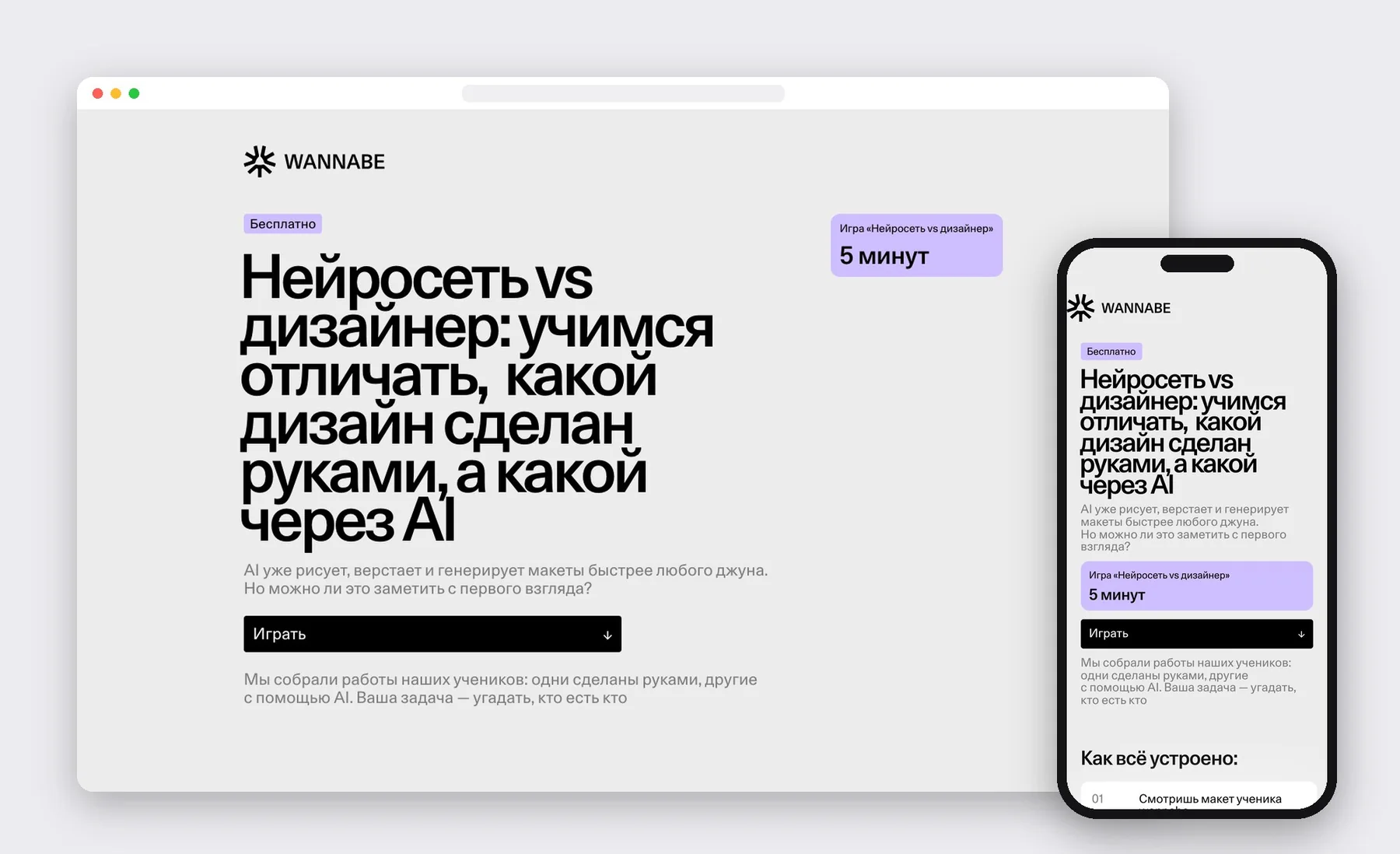
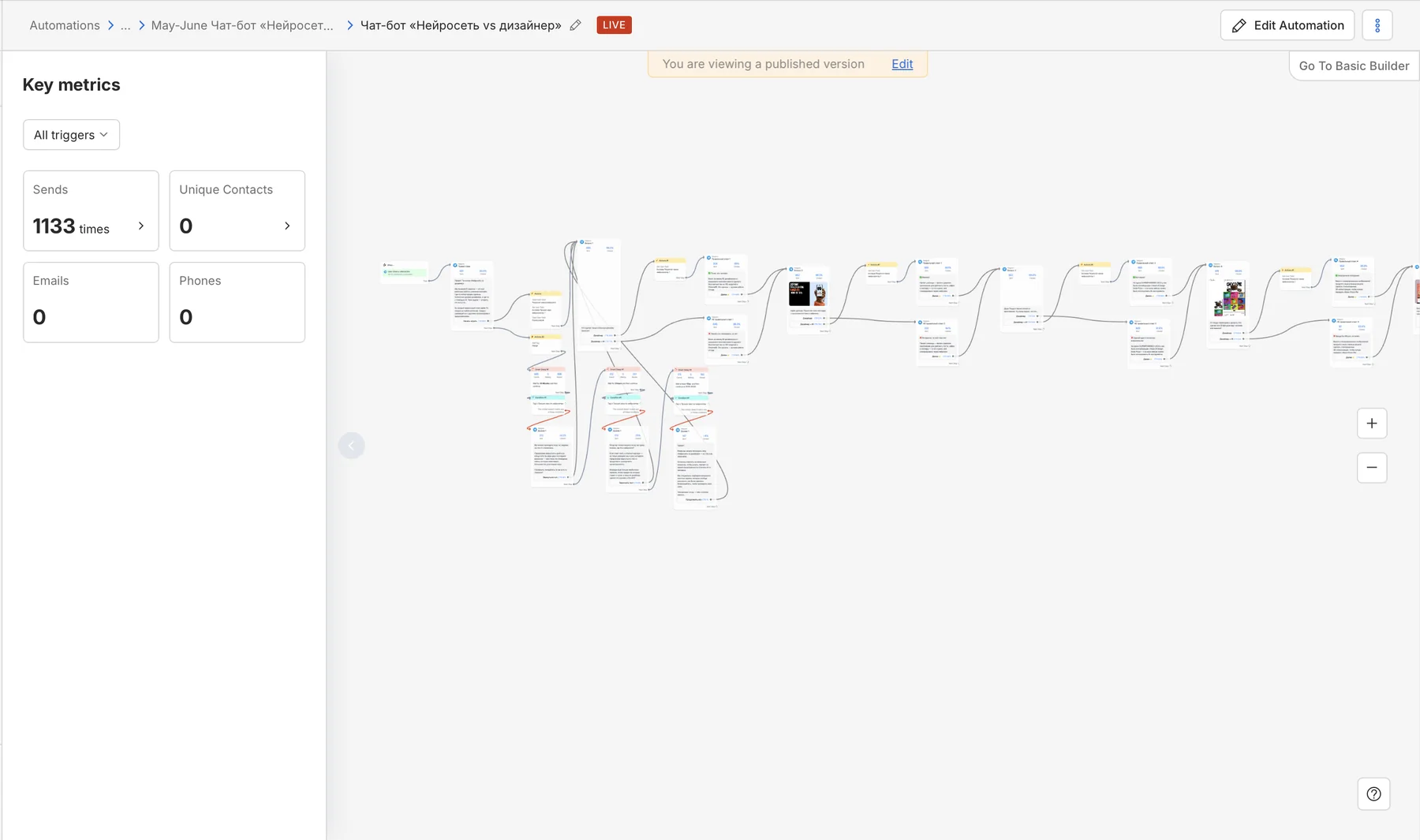
AI vs designer. The editor and I came up with the idea together. In a week I built an automated flow in Manychat — the questions, the discount and the promo code — plus a landing page for ads. 1,077 starts, 94% reach the last question, 72 purchases, ×11 return.
Short courses. I opened promo codes for short courses priced at 30,000–50,000 rubles too. The entry threshold dropped, and 76% of event payments in Q2 went to them.
Three free mini-courses and what they showed
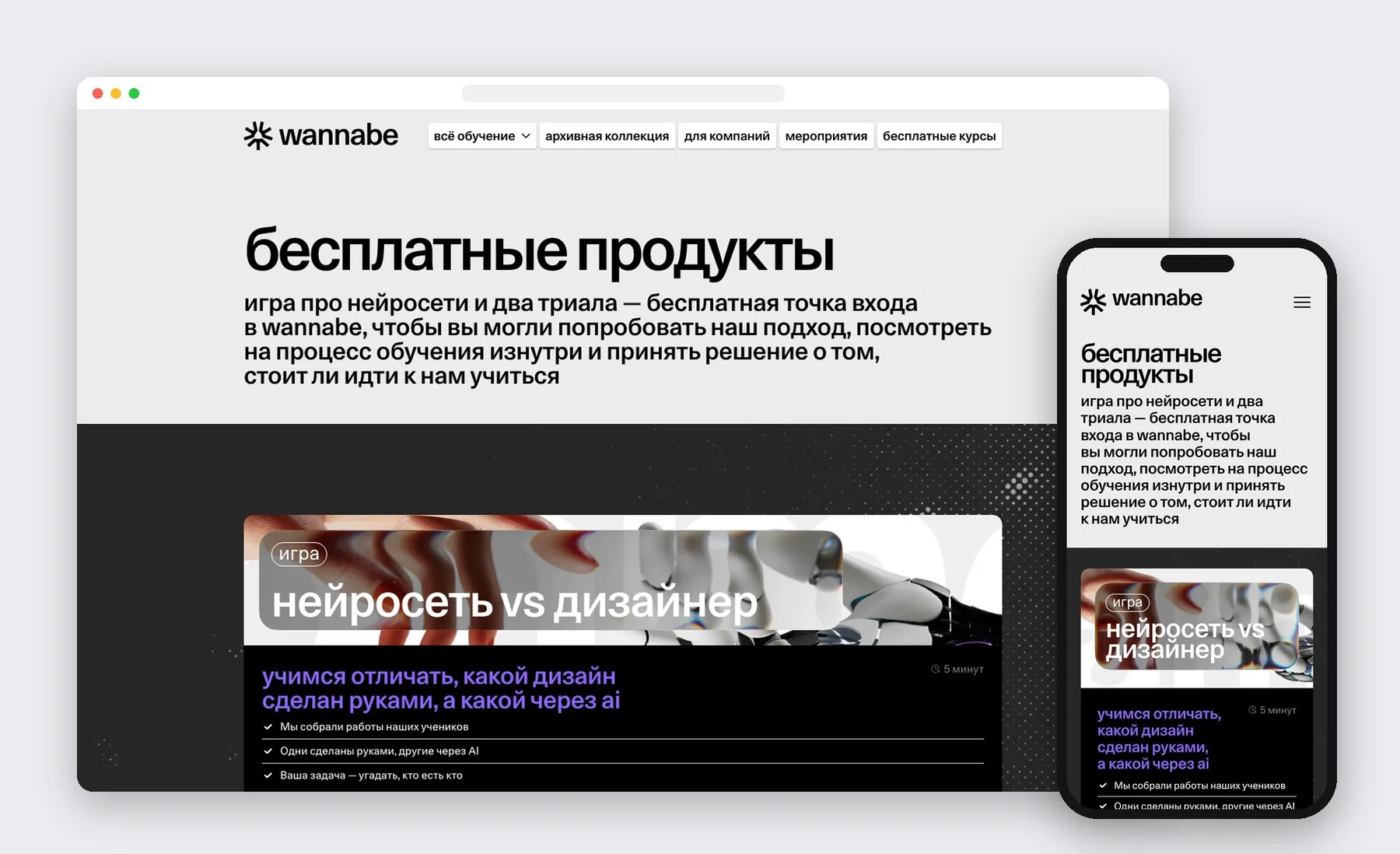
The free products page. I built the structure and copy, and a designer made the layout. One entry point for ads and newsletters: the game and mini-courses people can take before buying.
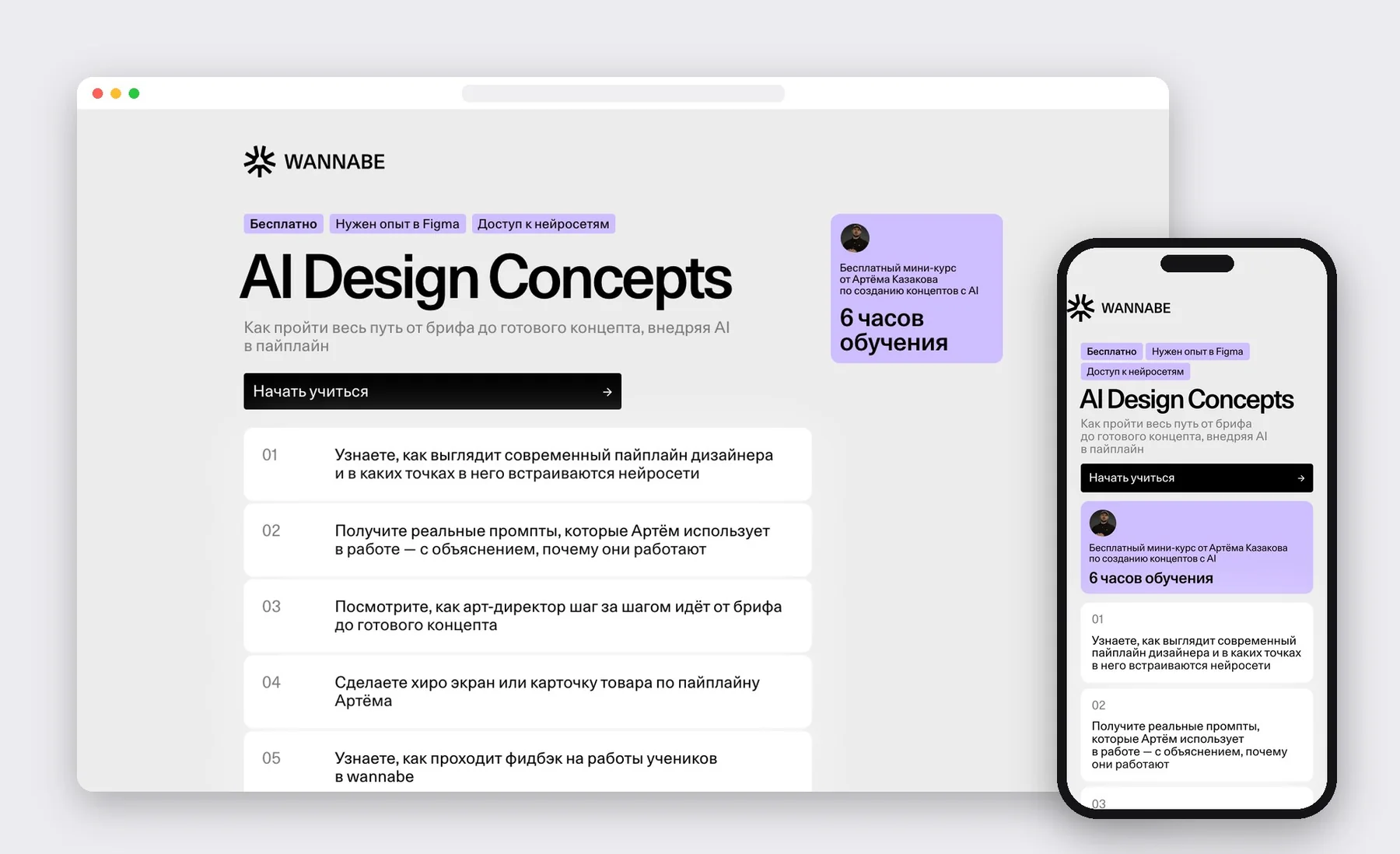
AI Design Concepts. Six hours of the real programme for free: a lecture, a master class, an assignment and a promo code at the end. We built it in 15 days and launched it as a follow-up to the events. 650 participants, 36 purchases, ×4.6 return. A purchase usually came 13 days after the mini-course, so I also counted purchases made without the promo code after the mini-course.
A mini-course on working with references. Four hours on the method of wannabe’s founder plus a review of your work by an art director. Lots of people joined, 454 in a quarter, but few bought: 12 payments and 22% of the revenue plan. People came for a free review of their work and got the main thing they might have bought the course for.
A mini-course for product managers. A week of access to part of the product management programme. Sign-ups were close to plan, 633 against 650, but fewer than 10% finished, and revenue came to 27% and 48% of plan two quarters in a row. In interviews people explained why: they signed up for later, and access ran out before they got started. I proposed longer access, starting straight from the core module where most people dropped off, and a series of emails after the mini-course ends.
The quarter in sum. In Q2 2026 the game and the two mini-courses for designers delivered 119% of their combined revenue plan. The game beat its plan more than twice over, AI Design Concepts almost hit its plan, and the references mini-course fell behind. One more observation: the game and the mini-courses sell different things. After the game people buy short courses and basic tiers; after the mini-courses, large programmes and senior tiers.
How I planned and measured the result
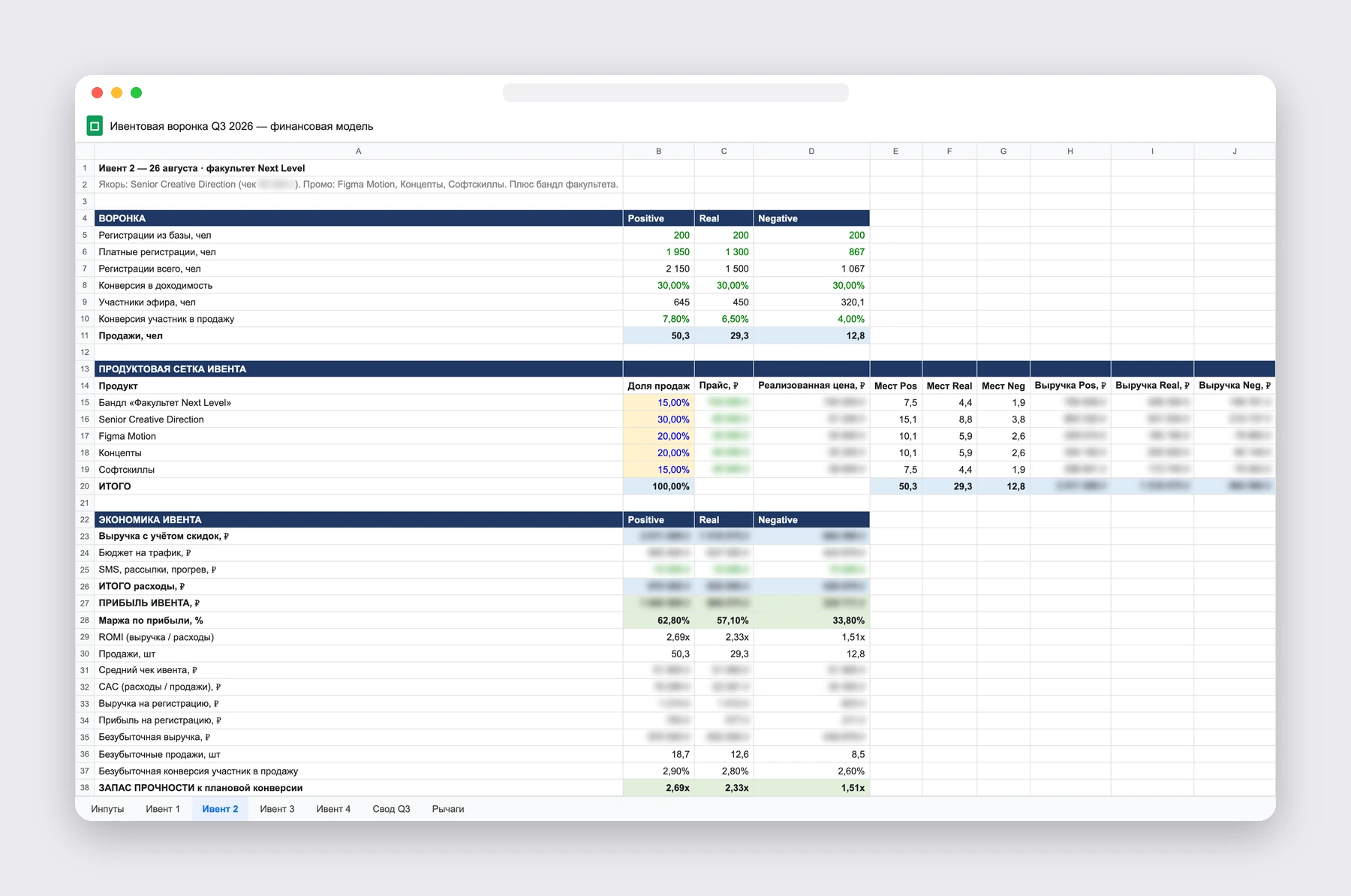
A financial model for each quarter. Before every quarter I built a model of the event funnel in three scenarios: positive, realistic and negative. It covered conversion at every step, the event’s product mix, margin, ROMI and the safety margin — how far conversion can drop before an event loses money. The model showed which lever is cheaper: a higher share of course bundles grows revenue without extra traffic, while buying more traffic eats into the margin.
Purchases come later. A cold audience doesn’t buy right away: in Q2, 58% of event payments came more than a week after the stream. If you only count purchases right after an event, the funnel looks worse than it is and it’s easy to switch off a good channel by mistake. So I counted delayed purchases too, and credited each payment only once so two channels couldn’t both claim the same sale.
A quarter as a cycle of hypotheses. Every quarter ended with a report and 4–6 hypotheses for the next one. The next report started by checking the previous hypotheses: what was confirmed, what wasn’t and why.
What didn’t work
At first I chose ads by cost per registration. The channel with the cheapest registrations brought people who barely came to the streams and didn’t buy. I switched to judging channels by payments, turned that channel off and moved the budget: the new channel brought a third of paid-ad payments.
More payments lowered the average order. Promo codes on short courses brought more payments, but the average order from events fell by 12%: more purchases, less revenue per purchase. As the next step I added a margin calculation for every tier.
A channel that worked for events didn’t pay off for the mini-courses. For the mini-courses it brought people who rarely bought, and given the ad cost it didn’t pay off. Now I check a channel’s payback separately for each product.
What works in any product
- 01
A free product should leave the problem unsolved. The references mini-course gave away the main thing, the work review, so there was no reason to buy afterwards. AI Design Concepts showed a method, and people came to the course to apply it.
- 02
The entry point decides what people buy. After a quick game people take short courses; after a mini-course, large programmes. Pick the entry mechanic for the product you need to sell.
- 03
Decisions take longer than a promotion lasts. 58% of event payments came more than a week later. Without counting delayed purchases, a good channel looks unprofitable.
- 04
A series convinces better than a single touch. 61% of payments came from people who attended two or more events: trust builds over several meetings.
- 05
The cheapest lead can be the most expensive. The channel with the lowest cost per registration may bring no payments at all. Compare channels by the money they bring in.
- 06
Free access time is part of the product. A week is enough to sign up, but too little for a busy person to feel the result.
«In the shortest time Ilya became an independent specialist who took responsibility for growth and for building entire marketing funnels. What strikes me most is Ilya’s love of business metrics.»